
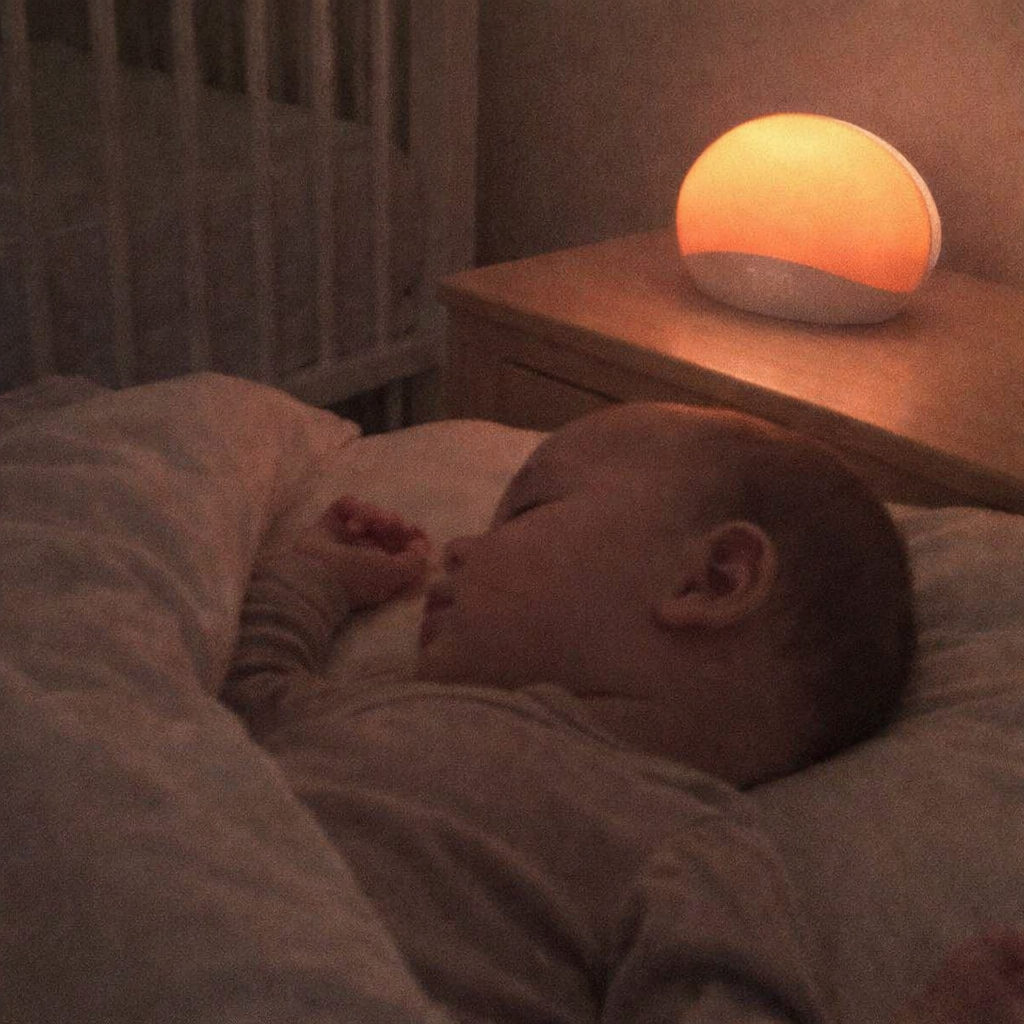
From parents & babies who are sleeping better
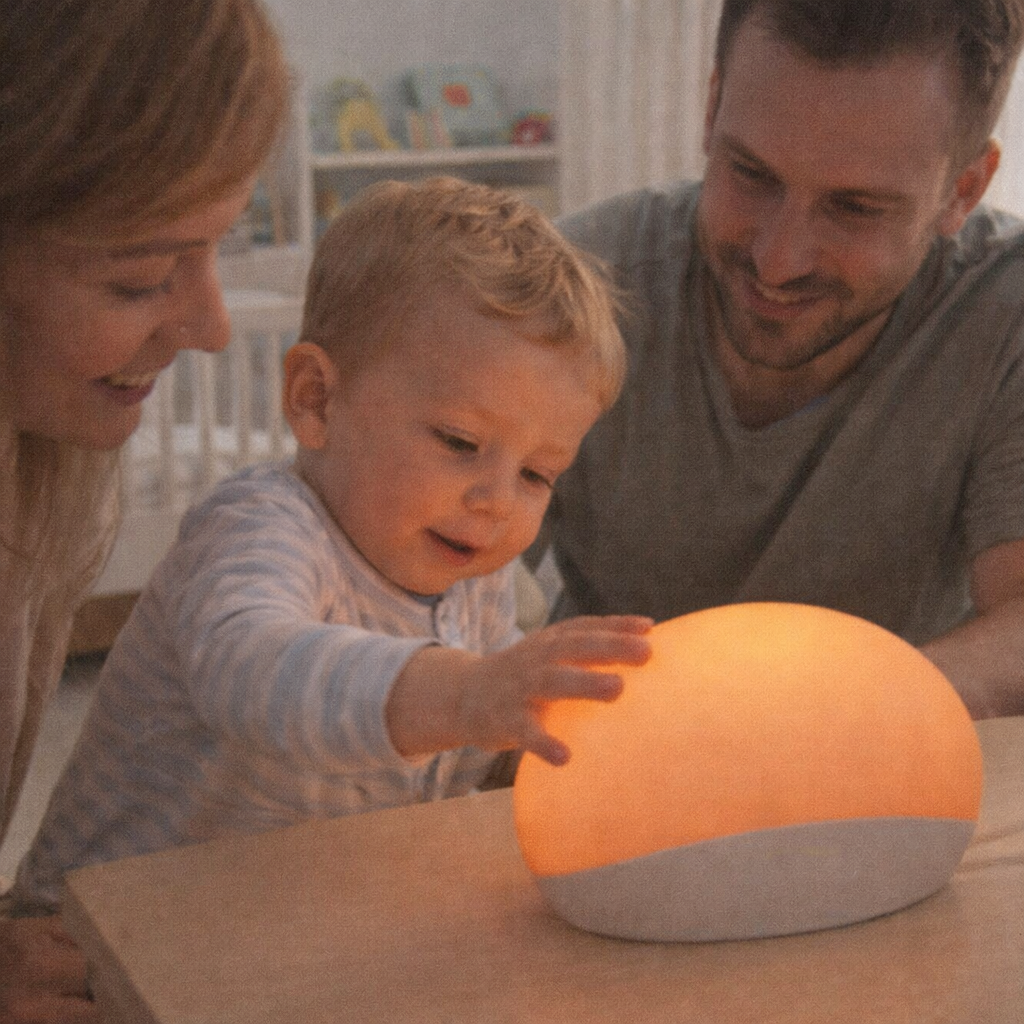
“The sleeping ritual that our little one has now due to the sunset light, is just amazing! As soon as that sun goes down, we can stop making an effort and enjoy the evening."
Marieke Klavers
"We didn't know that our previous white noise device was too loud. We're super happy to have read about Lunera, and the sleeping routines work much better than any other device"

Jessica Yang
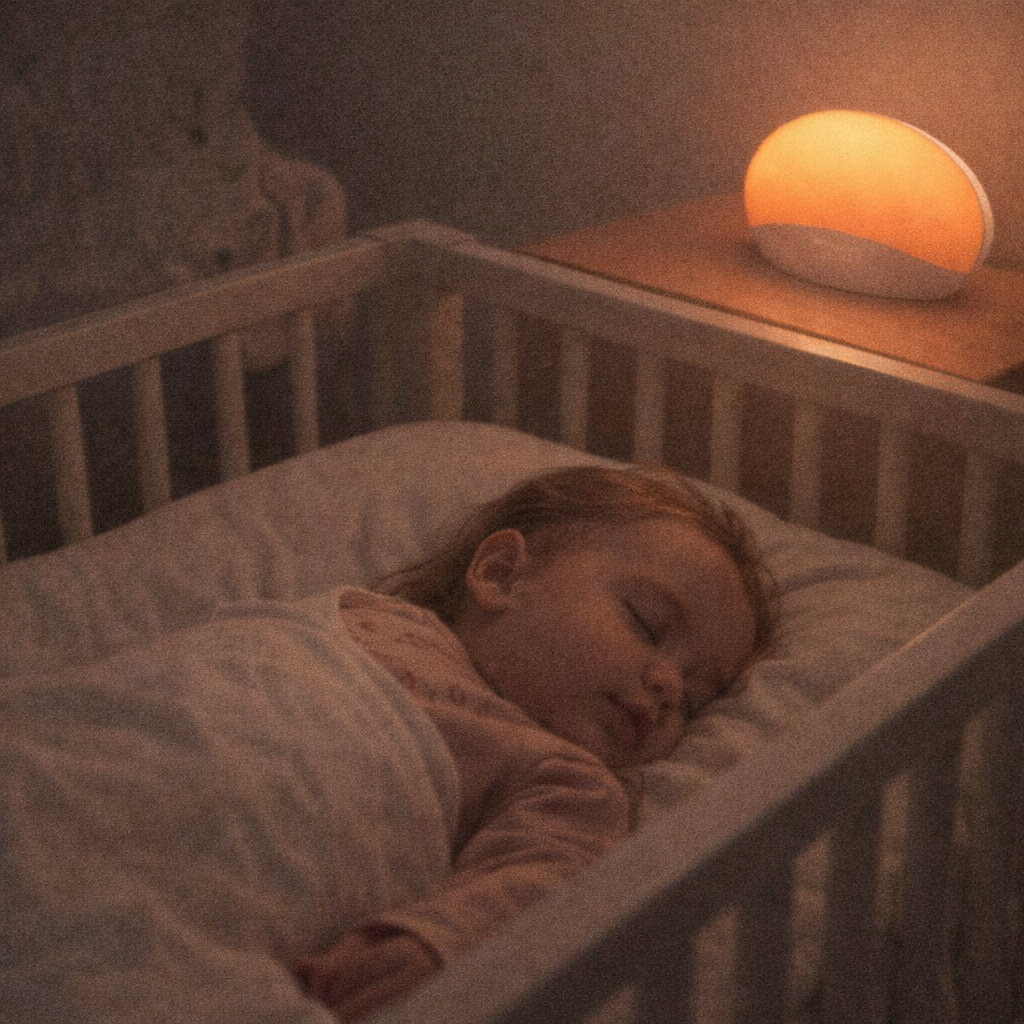
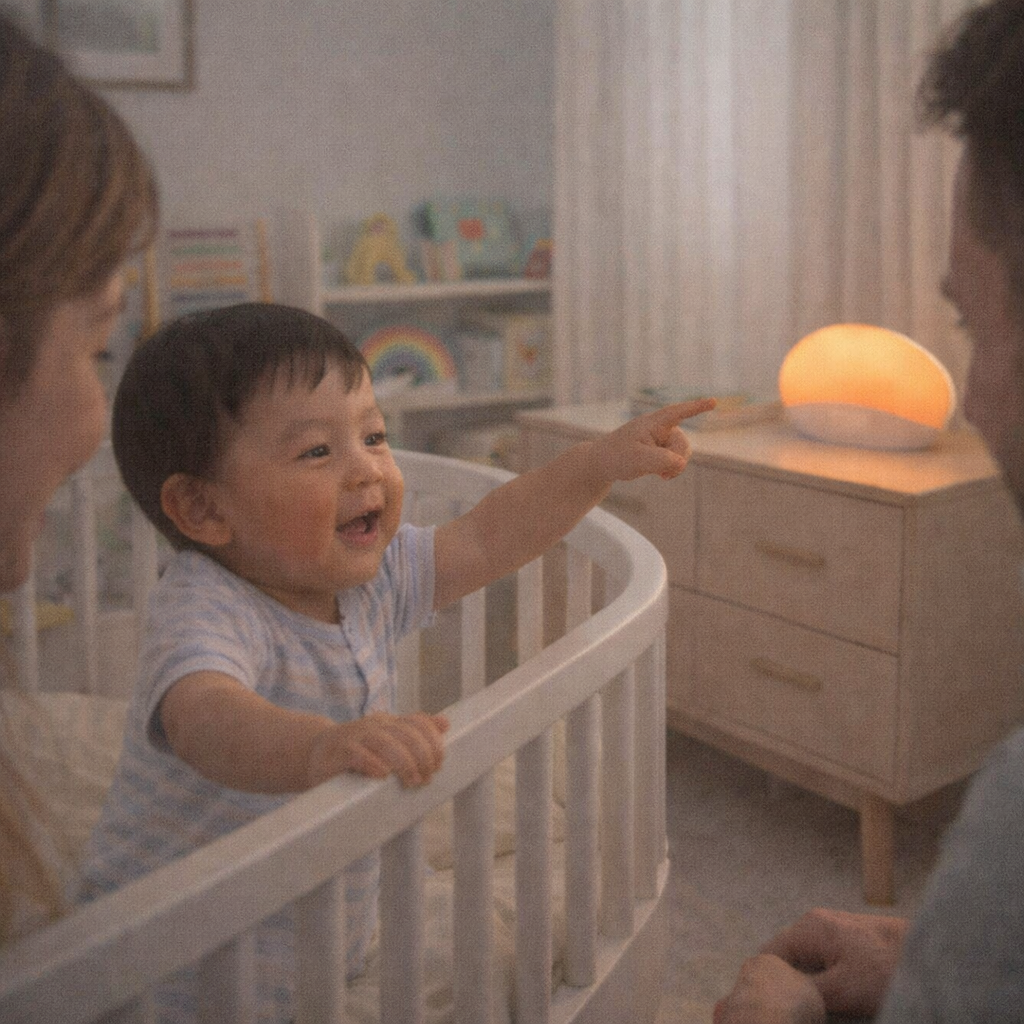
"Our babygirl has never been mor excited to go to sleep. She loves the light, the sounds (we try to do a different sound every day of the week). It's super cool!!!"

Dave Rodriguez
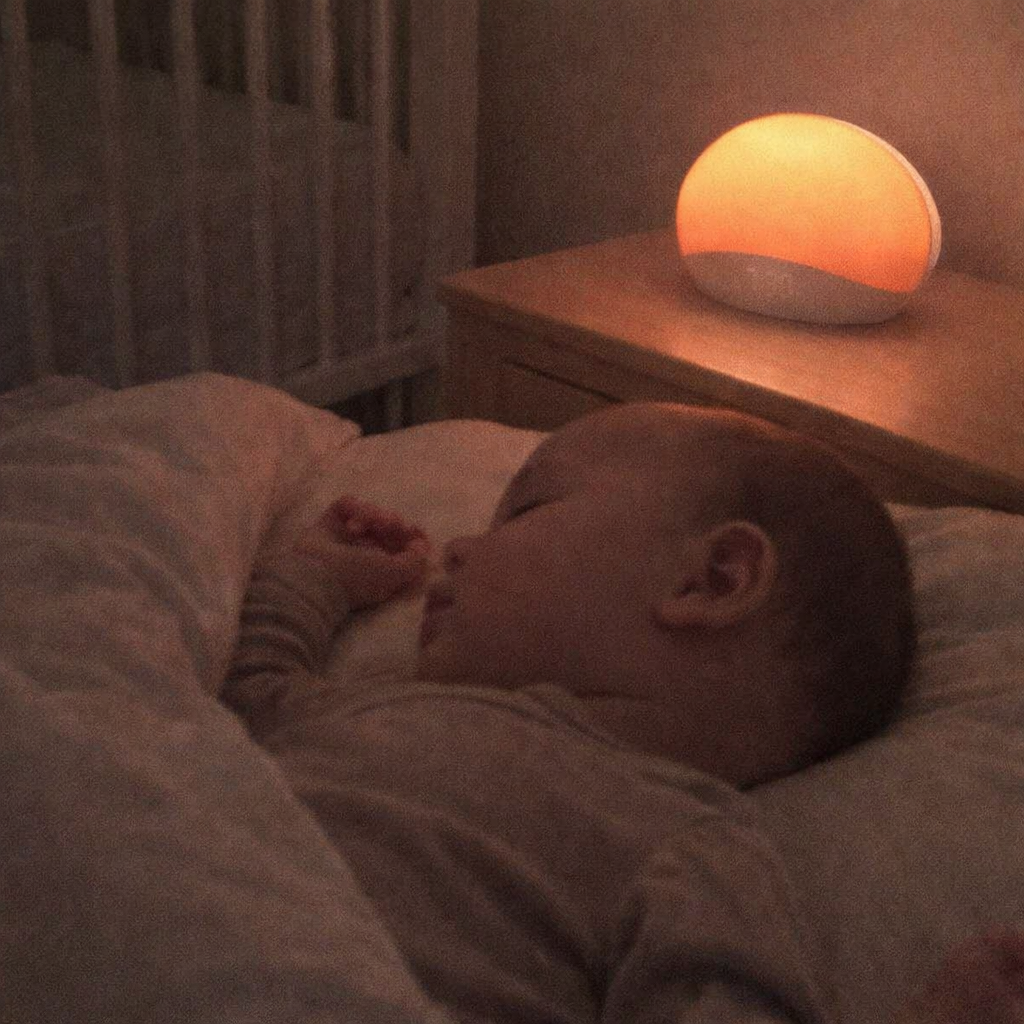
"My husband is a biologist and wanted to have a sunrise device for our son even before he was born. We found Lunera and we're very happy about the results!"

Eve & Josiah
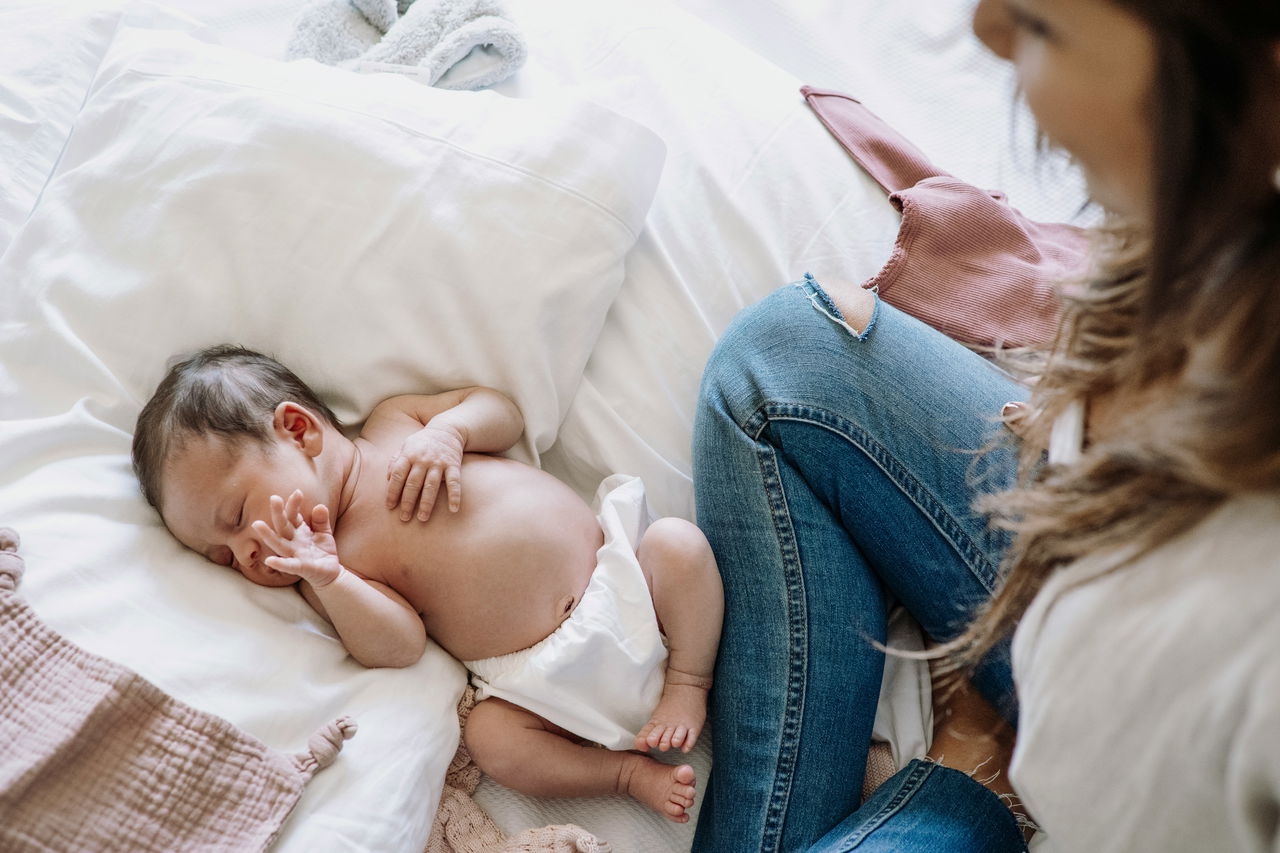
Did you know?
Parents lose hours of sleep after birth.
Studies show that parents lose between 400 and 700 hours of sleep in the first year alone.
The loss of sleep continues for up to 6 years after the birth of a child.
This can affect the parent's life an the quality of their relationship.
Haven't we all argued with our spouse simply because we're sleep deprived?
Think of increased anxiety, stress and more... Let alone the effects it has if a child doesn't get its proper sleep.
Insufficient or fragmented sleep among kids is associated with increased irritability, reduced emotional regulation, and difficulties with attention and learning as they grow.
It's clear that a happy baby = a healthy life. But what makes a baby fall asleep happily ever after, and what definitely doesn't help?
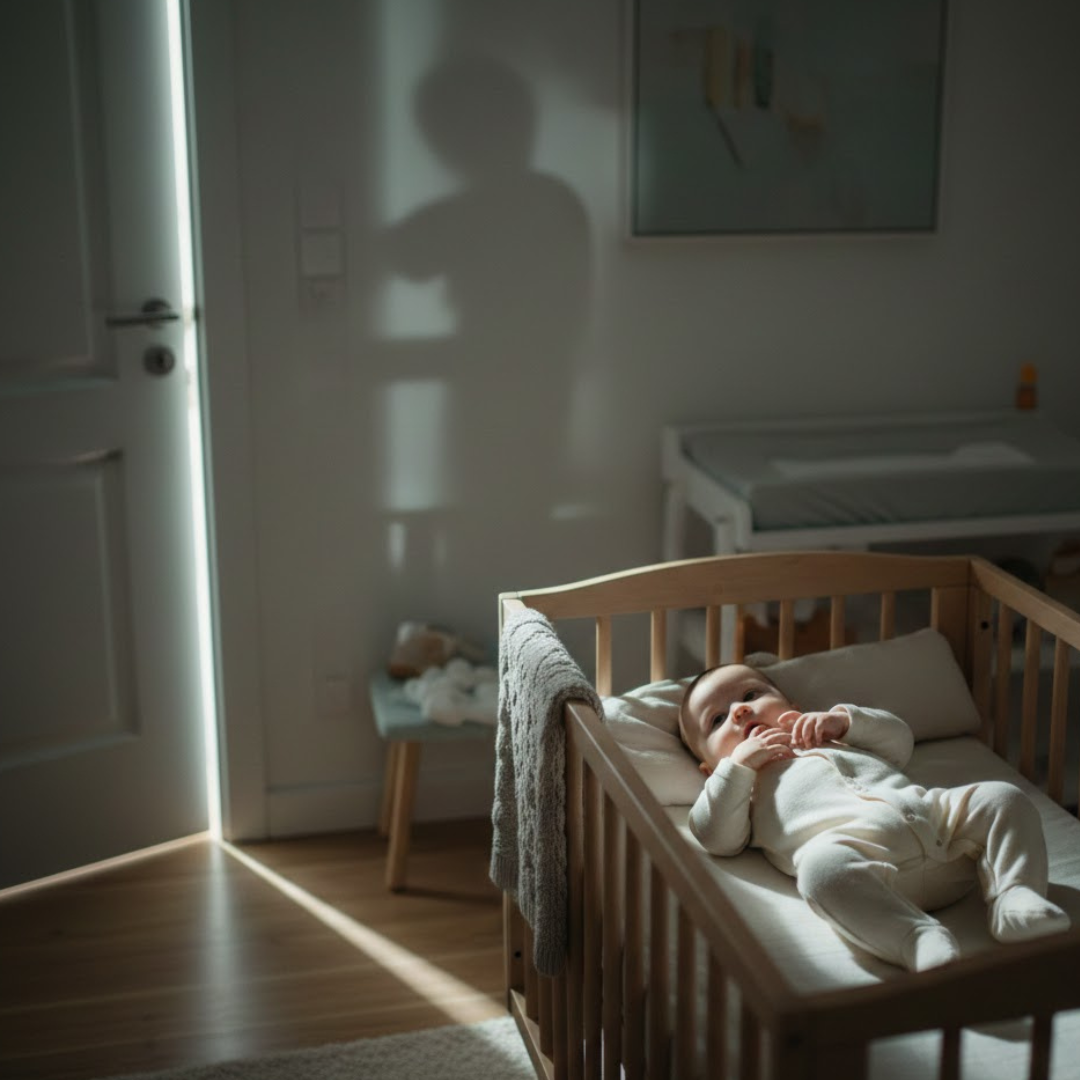
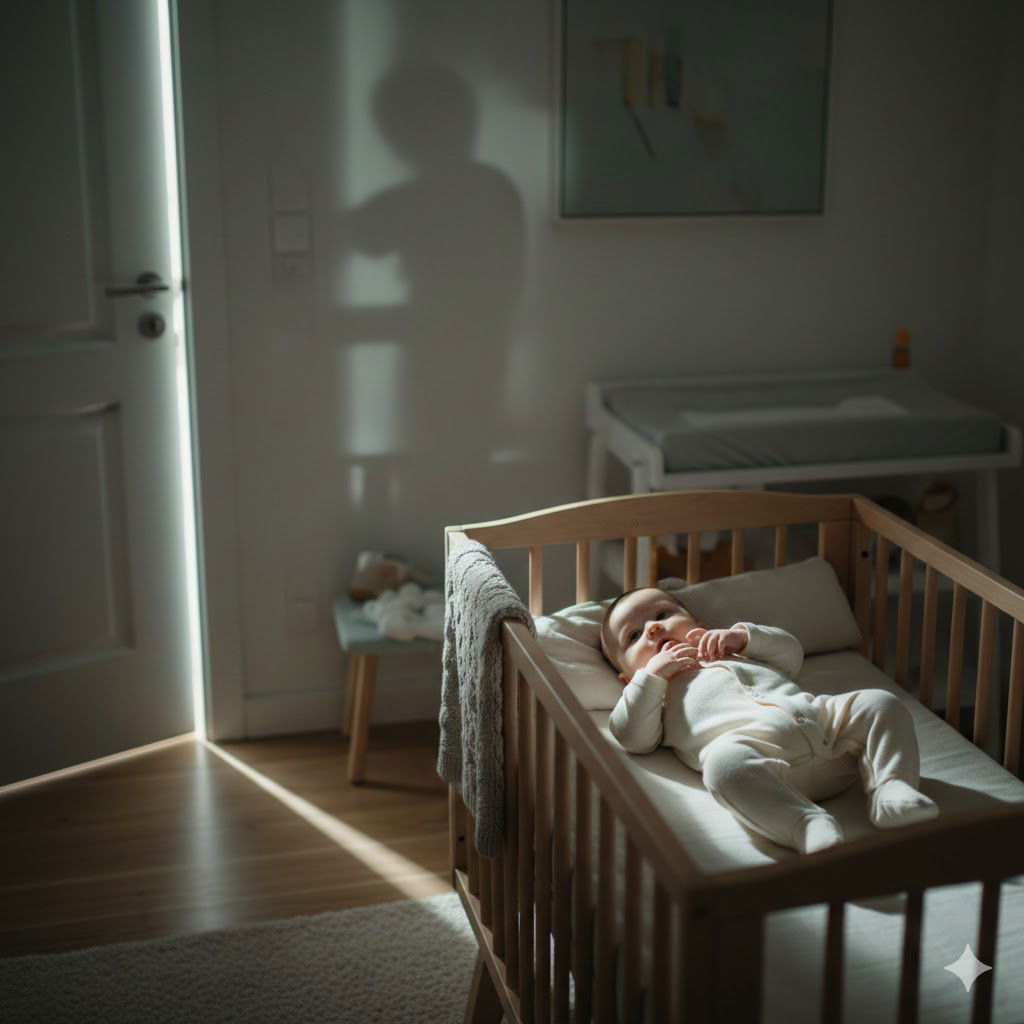
This is what disrupts a baby during sleep.
Sudden changes in sound
Sudden changes in sound, even small ones, can wake your little one, while steady, consistent noise helps protect their sleep.
Inappropriate light exposure at night
Soft, warm light in the evening and brighter light in the morning gently support your child’s natural sleep rhythm.
Wrong room temperature and air dryness
A comfortably cool room (around 18–21°C) helps your child sleep more deeply and peacefully through the night.

Creating the right sleeping condition for our kids...
can be confusing...
So which products actually help and which claims smell like fresh diapers💩?
Helping our children's biological rhythm develop improves their sleep & health.
Light wavelength supports natural melatonin production and thus sleep.
Use max 60 minutes when going to sleep and when waking up.
Predictable routines improve sleep regularity, especially among kids.
Our volume is max 50db which is the established safe sound level for kids.

Having a sleep device turned on the whole night helps sleep.
This device guarantees your baby will sleep through the night.
Its oke to have a white noise machine close to a baby
Smart tracking and AI will fix your baby’s sleep.
More colors and visual stimulation help babies relax.
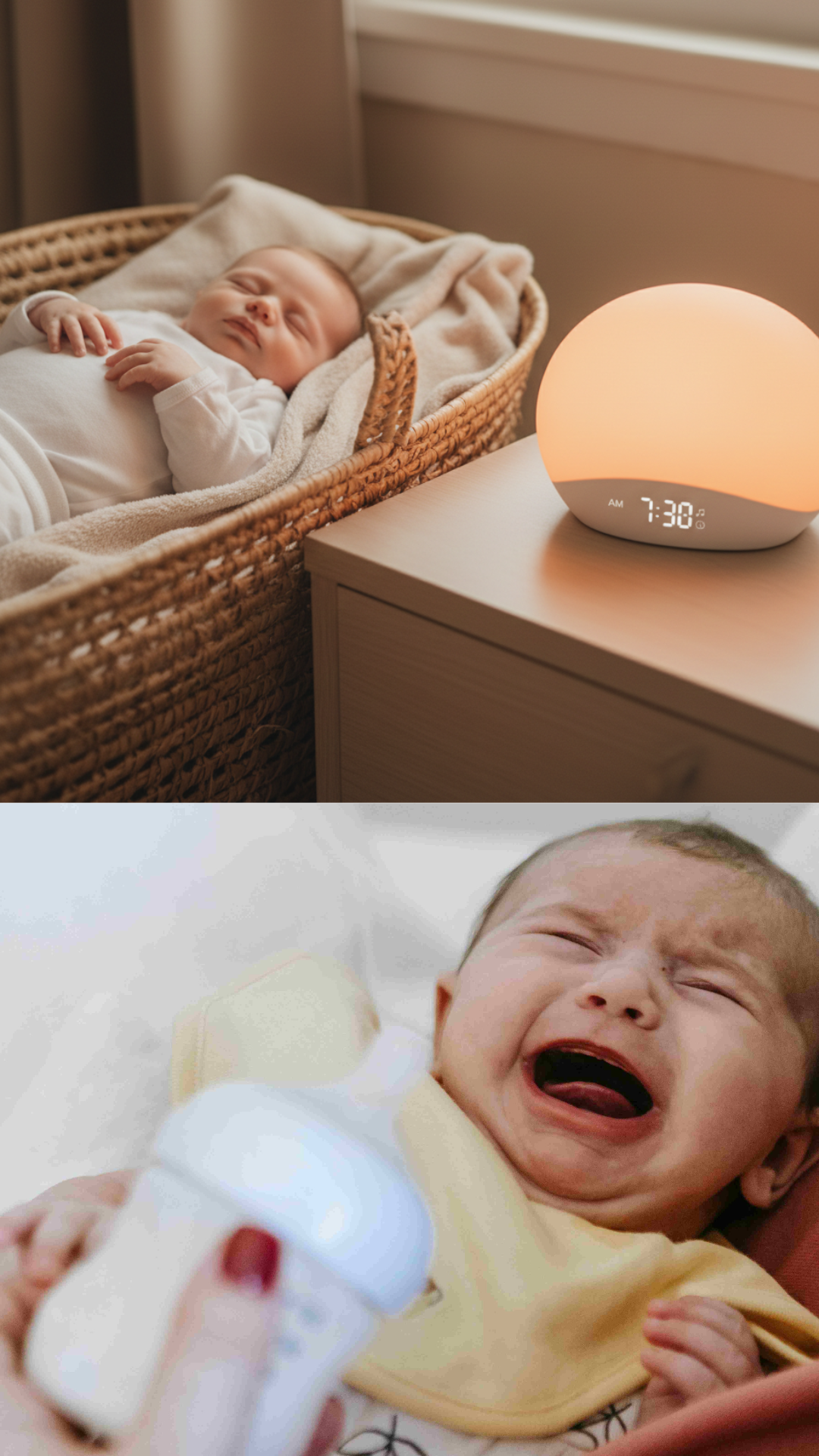
Our main focus is light.

Circadian light plays a significant role in children's sleep.¹²³
So what is carcadian light and what does it have to do with your horror nights as a parent?
Circadian light is light exposure that influences the body’s internal clock
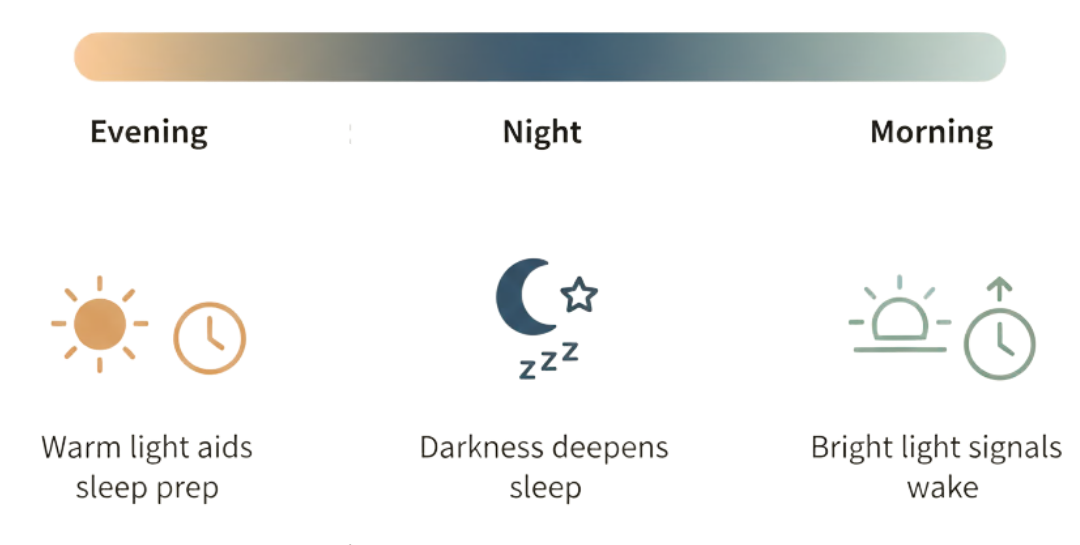
Light is the primary signal that regulates the biological clock. Children are more sensitive to light exposure than adults because more light reaches the retina through larger pupils and clearer lenses¹.
Research shows that evening exposure to bright or blue-weighted light suppresses melatonin more strongly in young children than in adults².
Even low light levels before bedtime can significantly delay sleep onset³. Consistent daytime light and evening darkness support the development of a healthy circadian rhythm in infants and children⁴.
So basically...
The type of light that your baby gets has an impact on melatonin, which has an impact on your kids' sleep.
(If you are a real sleep-deprived parent, you most likely already know what melatonin is)
Evening
Warm light supports melatonin production
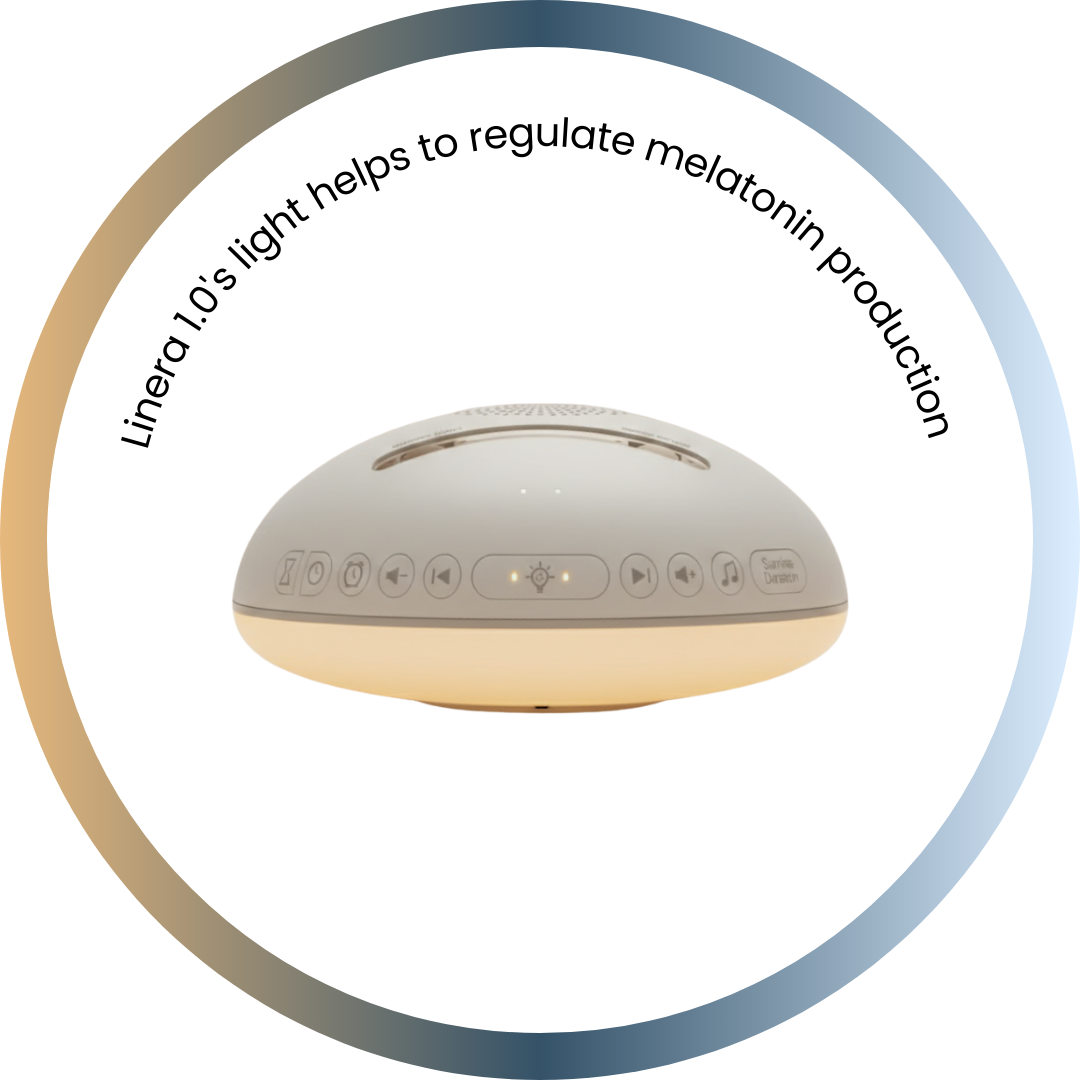
Morning
Bright light minimizes melatonin so you wake up.
But what about the white noise then...?
White noise is a continuous sound that contains all audible frequencies at equal intensity, creating a steady, non-varying background that can mask sudden changes in environmental noise.
White noise affects sleep primarily by reducing contrast between silence and sudden noise.¹²³
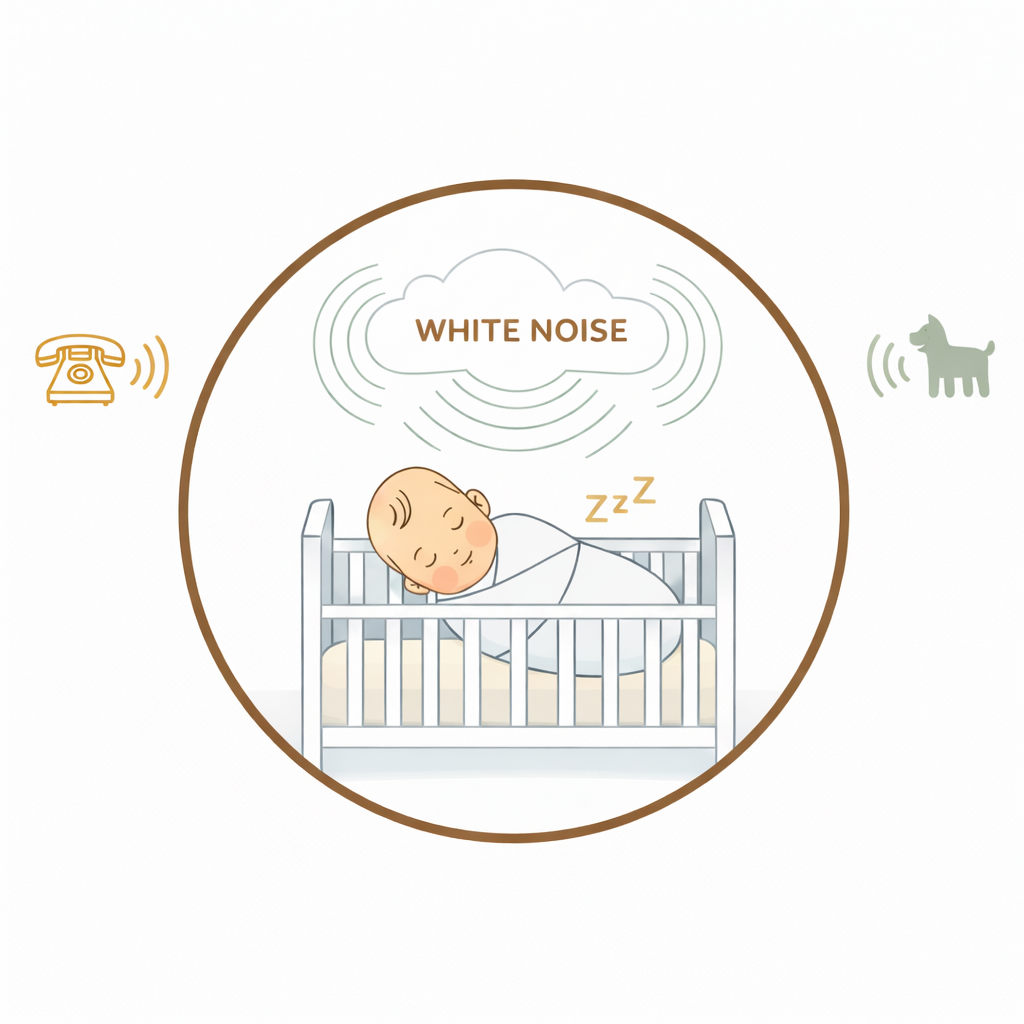
White noise serves as a constant auditory anchor that facilitates sleep by masking sudden environmental sounds.
Research indicates that white noise can significantly reduce the time it takes for infants to fall asleep, with one study showing that 80% of newborns fell asleep within five minutes when exposed to it, compared to only 25% in a control group¹.
Unlike intermittent sounds like a dog barking or a phone ringing, which trigger the brain's "arousal response", white noise creates a steady sound floor that makes these peaks less noticeable to the sleeping brain².
Furthermore, because it mimics the continuous, rhythmic sounds of the womb, white noise can be a powerful cue for sleep association in young children³.
However, experts recommend maintaining a safe volume (below 50 decibels) and placing the machine at a distance to protect developing hearing⁴.
so What did we conclude at lunera?
Consistent sound can help reduce disruptive noise.
Light, however, is the primary signal that sets the sleep-wake cycle.
Hence, Lunera focuses on evidence-based lighting to support healthy circadian timing.
So, we combined light & sound to help you win back your peaceful nights as a loving parent.
Help your baby to fall asleep on their own, using a light & sound sleep ritual
Reduce the risk of waking your child at night due to white noise
Feel confident about Lunera 1.0 as its backed by science
Experience more time together as parents, and less time struggling
Enjoy a more awakened and energetic baby due to sunrise carcadian alarm
Your baby sleeps longer and better, causing less disruptive behavior the next day
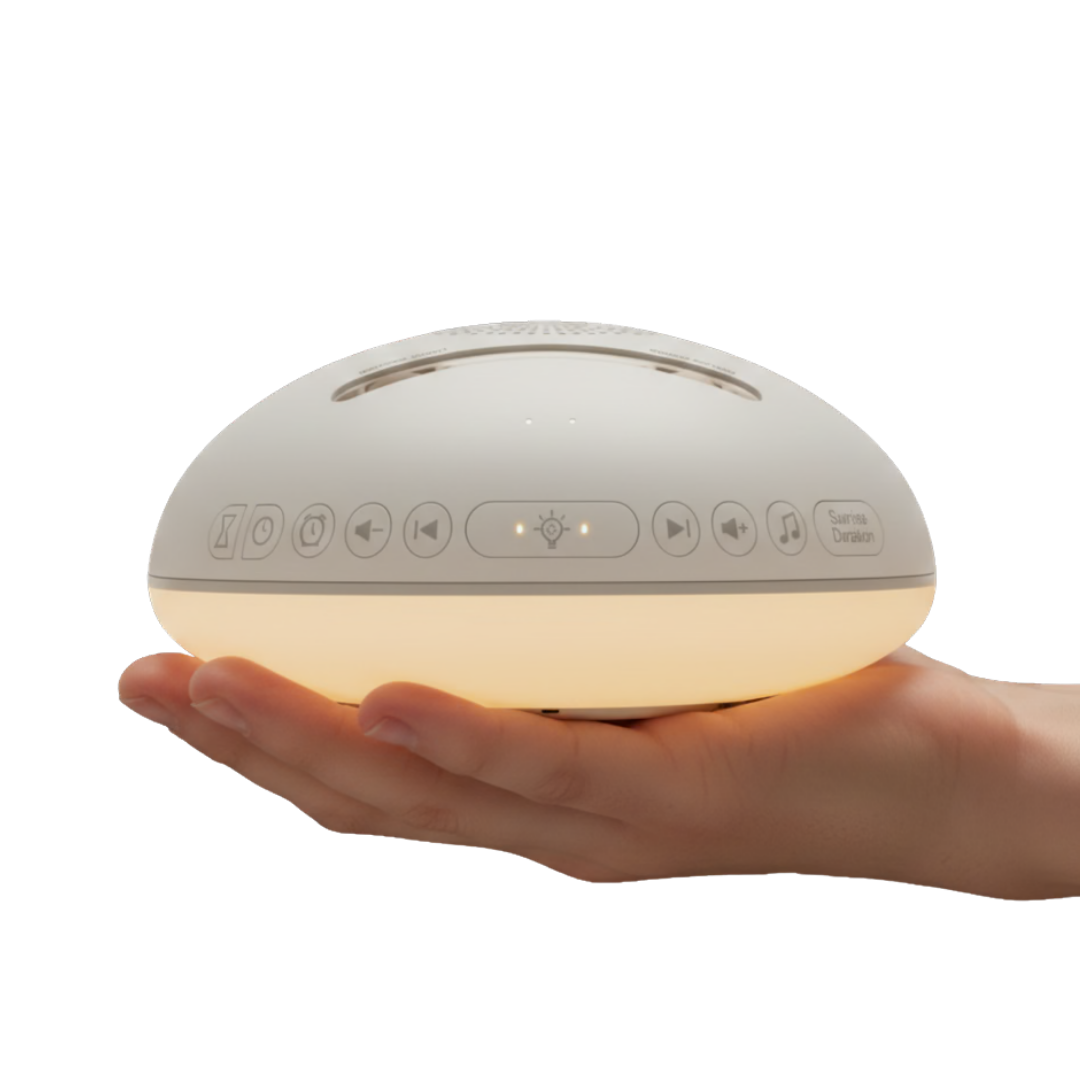
Circadian sunset and sunrise
Our light is designed to align with your body’s natural sleep and wake rhythm.
Over 25 Sounds
That regulate the sound environment during sleep
Adjustable night lamp
Choose from 8 colors to use Lunera as a comfortable, relaxing night lamp.
Let's summarize why you should choose Lunera
Focus on creating circadian light rythm
Safe sound levels for white noise functionality
30-day trial
Sunrise alarm clock for perfect mornings
1-year warranty, no questions asked

Other infant sleep devices

Frequently
Asked Questions
Lunera is designed to support healthier sleep environments by addressing two well-documented disruptors of sleep: unpredictable noise and inappropriate light exposure, particularly in the evening and at night. It does not induce sleep, but helps create conditions that are more conducive to it.
Yes! Actually, it is designed to be used safely in a kid's room! In comparison to other devices, we limit our max decibel level to 50 db, instead of the usual 80 db (!). When used according to guidance, Lunera aligns with established pediatric sleep recommendations. Sound levels are adjustable, light output is controllable, and the device is intended to be placed at a safe distance from the child, not inside the crib or within arm’s reach.
Many sound machines focus on volume or quantity of sounds. Lunera focuses on consistency, control, and physiological relevance, combining stable sound masking with light options designed to avoid blue-wavelength stimulation that can interfere with melatonin production.
We also made sure our sounds cannot exceed 50 db (which is the max according to scientists). Most white noises can exceed this easily...!
Chronobiology research shows that light is the primary environmental signal regulating the human circadian system, while sound plays a secondary, supportive role. Even low levels of blue-enriched or bright light in the evening can suppress melatonin and delay biological night, particularly in children.
Lunera prioritizes controlled, warm light exposure to avoid sending a “daytime” signal to the brain, while using sound as a complementary tool to reduce unpredictable noise rather than override sleep physiology.
Gradual light increase is used in sleep science to support circadian alignment during wake-up, particularly for older infants, toddlers, and adults. It is not an alarm replacement, but a gentler environmental cue for morning transitions.
Evidence suggests that consistency matters more than intensity. Use Lunera as part of a predictable routine: stable sound, low warm light in the evening, darkness during sleep, and regular timing night to night.
Our flagship Lunera 1.0 model is only available in the EU for now and we ship to any country in the EU within 1-2 business days. We want healthy sleep rythms to be available for all parents, so we pay for the shipping.
If for some reason Lunera 1.0 doesn't help, we will refund your money, no questions asked. You can also order Lunera 1.0 and do 30-days of proofnapping and see whether you like our product.
This way we hope to make it risk-free for parents to try out Lunera 1.0.
Yes! Once your package left our warehouse, you will receive an email with a tracking code to inform details about your delivery.
Lunera 1.0 device
USB-C charger
Instruction manual
Digital eBook "Healthy Sleeping Habbits for kids"
The short anwer is no. We did not want to make a wireless device for kids. Wireless devices emit radiation and we'd rather not have that in a kids room.
The clock functionality works without the plug, but all the other functionalities only work when Lunera 1.0 is plugged in.
We recommend placing Lunera 1.0 from about 1 meter distance from your baby's bed and leave it there plugged. The whitenoise and lighting function operate best when around 1 meter distance away.
Lorem ipsum dolor sit amet, consectetur adipiscing elit, sed do eiusmod tempor incididunt ut labore et dolore magna aliqua. Ut enim ad minim veniam, quis nostrud exercitation ullamco laboris nisi ut aliquip ex ea commodo consequat. Duis aute irure dolor in reprehenderit in voluptate velit esse cillum dolore eu fugiat nulla pariatur.